Dana S. Cummings, EdD, CFRE | July 2026
Earlier this week, our family traveled to northern Indiana to participate in the American Solar Grazing Association’s annual certification training. By the end of the week, all five members of the Cummings family had officially earned ASGA Solar Grazing Certification.
That milestone was certainly worth celebrating, but what made the week truly valuable wasn’t the certificate. It was the opportunity to spend several days learning from experienced graziers, researchers, veterinarians, and solar industry professionals who are helping shape one of agriculture’s fastest-growing fields.
Like many conferences, we returned home with pages of notes, new ideas, and plenty to think about. Here are a few of the lessons that stood out most.
Solar grazing is becoming a true profession.
One message surfaced repeatedly throughout the week: successful solar graziers have to think like service providers.
Traditional livestock producers often focus primarily on animal production. Solar grazing adds another layer of responsibility. Developers depend on graziers to manage vegetation safely, consistently, and professionally over many years.
Communication was emphasized again and again. The best grazing partnerships aren’t built solely on healthy sheep—they’re built on responsiveness, reliability, and trust.
One presenter described vegetation management as “customer service with sheep.”
We loved that perspective.
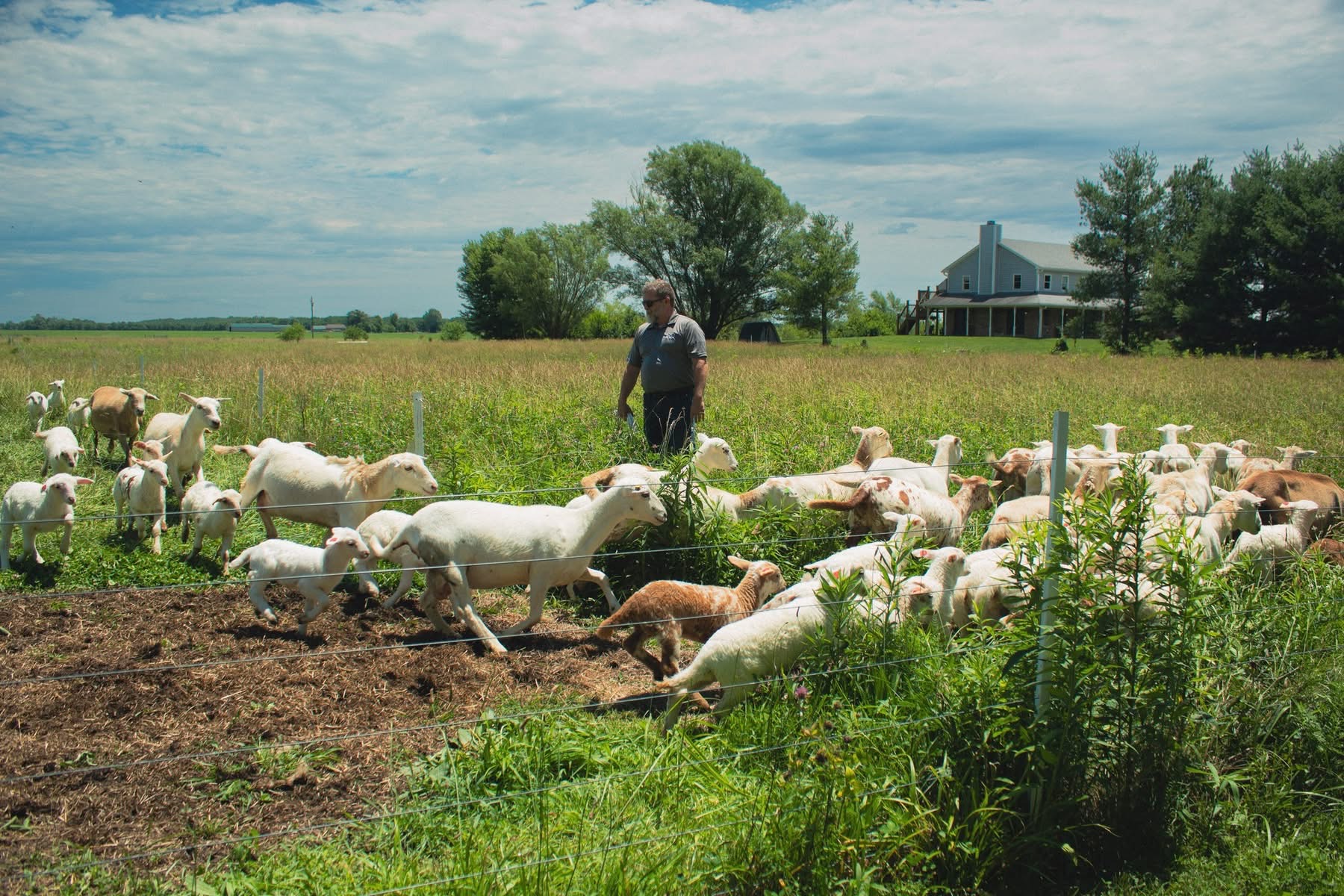
Healthy sheep are still the foundation.
Although the solar industry continues to evolve, excellent animal husbandry remains at its core.
Sessions covered parasite resistance, breeding decisions, flock health certification, genetics, body condition scoring, stocking density, guardian animals, and maternal traits.
One concept that particularly resonated with us was selecting sheep for long-term resilience rather than simply maximizing production. Sheep that maintain body condition, resist parasites, mother well, and thrive on forage are especially well suited for grazing beneath solar panels.
Good grazing begins with healthy sheep.
Technology is changing the way graziers work.
We were fascinated by the number of digital tools now available to graziers.
From mapping software that helps pinpoint exact locations within large solar arrays to ranch management platforms that simplify recordkeeping, technology is becoming an increasingly valuable part of daily operations.
It was encouraging to see agriculture and technology working hand in hand to improve both efficiency and animal care.
Solar grazing is about more than mowing grass.
One of the strongest themes throughout the conference was stewardship.
Proper vegetation management protects solar infrastructure while reducing reliance on fossil-fuel-powered mowing equipment. Speakers also discussed soil health, water management, biodiversity, and long-term land stewardship.
We especially appreciated the reminder that agrivoltaics allows us to produce renewable energy while continuing to produce food from the same land.
As one presenter put it, we have to power the world and feed the world—and agrivoltaics helps accomplish both.
That simple statement captures exactly why we’re so passionate about this work.
We’re still learning.
One of the things we appreciate most about ASGA is its willingness to bring together people from many different backgrounds—farmers, researchers, universities, solar developers, and land managers—all with a common goal of improving the future of solar grazing.
No one has all the answers yet.
Every season teaches us something new, and every conference gives us fresh ideas to bring back to Sunovis Ranch.
We’re grateful to ASGA, to the many presenters who shared their expertise, and to the farm families who continue to build this industry together.
We drove home with new ideas, new friendships, and an even deeper appreciation for the role solar grazing can play in the future of American agriculture.